
Florida’s rainy season transforms the Sunshine State into a watery wonderland, but for homeowners in Fort Lauderdale, it can quickly turn into a nightmare of flooded basements, soaked carpets, and structural woes. From June to November, heavy downpours, tropical storms, and the occasional hurricane bring relentless rain that tests the resilience of your home. If you’re in neighborhoods like Coral Ridge or Harbor Beach, you’ve likely seen streets turn into rivers after a single afternoon shower. But fear not—preventing flood damage is possible with proactive steps. At Fort Lauderdale Water Damage Restoration, we’ve helped countless residents in Wilton Manors and beyond weather the wet season unscathed. In this guide, we’ll share practical, actionable advice to keep your property dry and your peace of mind intact.
Understanding Florida’s Rainy Season
Florida’s rainy season isn’t just about occasional drizzles; it’s a full-on deluge driven by warm Atlantic waters and shifting weather patterns. Expect average rainfall exceeding 60 inches annually, with peaks in summer months when thunderstorms pop up almost daily. In Fort Lauderdale, the combination of coastal location and low-lying terrain amplifies flood risks, especially during king tides that coincide with heavy rains.
What Makes Fort Lauderdale Particularly Vulnerable?
Our city’s intricate canal system and proximity to the Intracoastal Waterway mean that even moderate rain can overwhelm drainage infrastructure. Areas like Pompano Beach to the north and Tamarac inland face similar challenges, where urban development has reduced natural absorption. Historical events, like the 2017 Hurricane Irma, remind us that ignoring preparation can lead to devastating water intrusion, mold growth, and costly repairs. By understanding these local dynamics, you can tailor your prevention strategy to Fort Lauderdale’s unique environment.
Preparing Your Home Before the Rains Arrive
The key to flood prevention starts well before the first drops fall. Early preparation can save you thousands in restoration costs and minimize disruption to your daily life.
Inspect and Maintain Your Roof and Gutters
A sturdy roof is your home’s first line of defense. Check for loose shingles, cracked flashing, or deteriorating seals around vents and chimneys—common issues in Florida’s humid climate. Clean gutters and downspouts thoroughly to ensure water flows away from your foundation. Clogged gutters can cause overflow, leading to interior leaks. For homes in elevated areas like Coral Ridge, consider installing gutter guards to reduce maintenance frequency.
If you’re unsure about your roof’s condition, consulting professionals for a pre-season inspection is wise. This simple step prevents minor issues from escalating into major floods.
Elevate Valuables and Install Flood Barriers
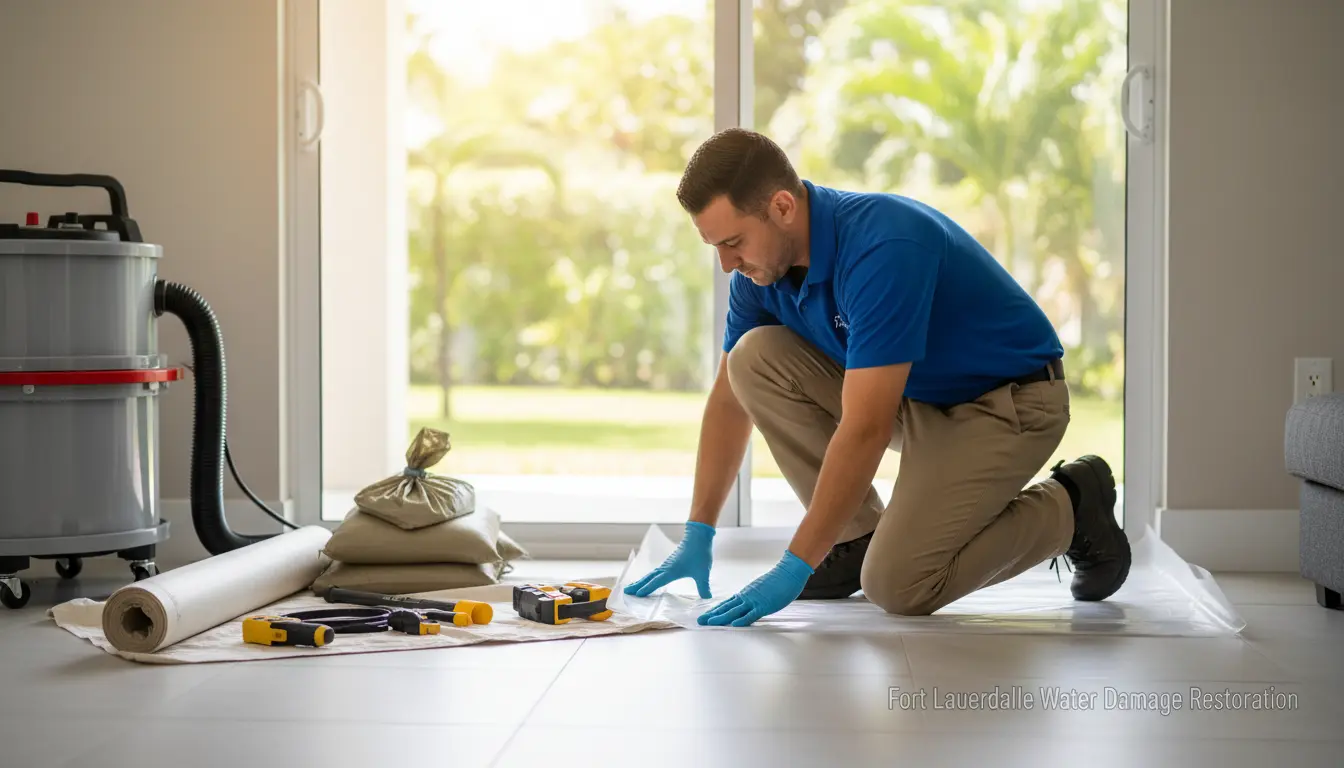
In flood-prone spots like basements or ground-floor garages, elevate appliances, furniture, and electronics on blocks or platforms at least 12 inches high. For exterior protection, sandbags or portable flood barriers around doors and low windows can redirect water. In Fort Lauderdale’s flat landscape, these measures are crucial, especially near canals in neighborhoods such as Harbor Beach.
Invest in sump pumps with battery backups to automatically remove water from crawl spaces or low areas. Smart sensors that alert your phone to rising water levels add an extra layer of security.
Landscape Your Yard for Better Drainage
Sloped landscaping directs water away from your home’s foundation. Ensure downspouts extend at least 5-10 feet from the house, and consider French drains or permeable pavers to absorb excess moisture. Native Florida plants with deep roots, like saw palmettos, help stabilize soil and prevent erosion. In areas like Wilton Manors, where heavy clay soils retain water, amending your yard with sand or gravel can improve percolation.
During Heavy Rains: Immediate Actions to Take
When the skies open up, quick thinking can prevent minor water issues from becoming disasters.
Monitor Weather and Stay Alert
Keep an eye on local forecasts via apps like the National Weather Service or Florida-specific alerts. In Fort Lauderdale, flash floods can develop in under an hour, so avoid driving through submerged roads in Pompano Beach or Tamarac. Secure outdoor items like patio furniture and trash cans to prevent them from blocking storm drains.
Shut Off Utilities if Flooding Occurs
If water begins to enter your home, turn off electricity at the breaker to avoid shocks, and shut off your main water supply to prevent backflow. For rapid response, our emergency water removal services in Fort Lauderdale can extract standing water swiftly, using industrial pumps to minimize damage.
Protect Indoor Spaces Proactively
Move valuables to higher ground and place towels or plastic sheeting at door thresholds. If you notice seepage, deploy wet vacuums immediately. In coastal areas like Coral Ridge, salt water intrusion from storm surges adds corrosion risks, so acting fast preserves your belongings.
Post-Rain Maintenance and Long-Term Strategies
After the storm passes, don’t relax just yet—thorough cleanup prevents lingering problems like mold and structural weakening.
Dry Out Thoroughly and Check for Hidden Damage
Use fans and dehumidifiers to dry affected areas within 24-48 hours. Our structural drying process employs advanced equipment to extract moisture from walls and floors, crucial in humid Fort Lauderdale where drying naturally takes longer.
Inspect for hidden water behind drywall or under flooring. If mold appears, apply antimicrobial treatment application to inhibit growth and protect your family’s health.
Invest in Professional Reconstruction if Needed
For severe damage, professional help is essential. Our reconstruction and repair team in areas like Harbor Beach restores homes to pre-flood condition, handling everything from drywall replacement to custom carpentry.
Long-term, consider flood insurance through the National Flood Insurance Program, as standard policies often exclude it. Elevating your home or adding flood vents can qualify you for discounts.
FAQ: Common Questions About Flood Prevention in Fort Lauderdale
1. How often should I clean my gutters during rainy season?
Aim for every three months, or after major storms. In Fort Lauderdale’s debris-heavy environment, more frequent checks prevent overflows that lead to foundation erosion.
2. What if my home floods despite precautions?
Contact experts immediately for water extraction equipment to remove water efficiently. Delaying can cause mold and further damage.
3. Are there government resources for flood-prone areas like Wilton Manors?
Yes, Broward County offers flood maps and mitigation grants. Check local resources or visit our Pompano Beach service page for area-specific advice.
4. Can I prevent flooding in my Tamarac condo?
Absolutely—focus on balcony drainage and community sump systems. For multi-unit buildings, coordinate with your HOA for shared protections.
5. How does climate change affect Florida’s rainy season?
Increasing storm intensity means more frequent heavy rains. Proactive measures like those outlined here are more vital than ever.
Conclusion: Stay Dry This Rainy Season with Expert Support
Preventing flood damage in Florida’s rainy season requires vigilance, preparation, and sometimes professional intervention. From gutter maintenance in Coral Ridge to emergency responses in Tamarac, Fort Lauderdale Water Damage Restoration is your trusted partner in keeping your home safe and dry. Don’t wait for the next downpour—implement these tips today and reach out to us for a free consultation or inspection. Protect what matters most; contact Fort Lauderdale Water Damage Restoration now at (954) 737-4755 or visit our website to learn more about our comprehensive services.