Imagine waking up to the sound of dripping water in your Fort Lauderdale home, only to discover a burst pipe or a sudden flood from heavy rains. In a city known for its tropical climate and vulnerability to storms, water damage can strike without warning, turning your safe haven into a soggy nightmare. But don’t panic—quick action can save your property and health. At Fort Lauderdale Water Damage Restoration, we’ve helped countless residents in areas like Coral Ridge and Flagler Village recover from such disasters. In this guide, we’ll walk you through essential emergency tips to handle water damage effectively, ensuring minimal long-term issues.
Whether it’s a leaky roof after a thunderstorm or sewage backup from clogged drains, knowing what to do immediately makes all the difference. Let’s dive into the steps you should take right away, tailored to the unique challenges of living in sunny South Florida.
Immediate Safety Measures: Protect Yourself First
Your safety comes before anything else when dealing with water damage. Fort Lauderdale’s humid environment can exacerbate hazards, so proceed with caution.
Assess the Situation and Evacuate if Necessary
Before touching anything, evaluate the extent of the flooding. If you smell gas, see sparks, or the water is from a sewage source, evacuate immediately and call emergency services. In neighborhoods like Rio Vista, where older homes might have outdated wiring, electrical risks are higher during floods. Turn off the main power switch from a dry location to avoid electrocution—never wade through water to reach your breaker box.
Wear Protective Gear
Slippery floors and contaminated water pose slip-and-fall risks. Put on rubber boots, gloves, and a mask to shield yourself from mold spores and bacteria. Fort Lauderdale’s warm weather means mold can start growing within 24-48 hours, so protection is key from the start.
Stop the Water Source: Prevent Further Damage
Once safety is secured, focus on containing the problem. The faster you act, the less water you’ll have to deal with.
Locate and Shut Off the Source
If it’s a burst pipe, find the main water shut-off valve—usually near the water meter or in the garage—and turn it clockwise. For appliance leaks, like a washing machine overflow, unplug it and close the supply valves. In coastal areas such as Pompano Beach, heavy rains can overwhelm drainage systems, leading to backyard flooding; in these cases, ensure outdoor faucets are off too.
Remove Standing Water Safely
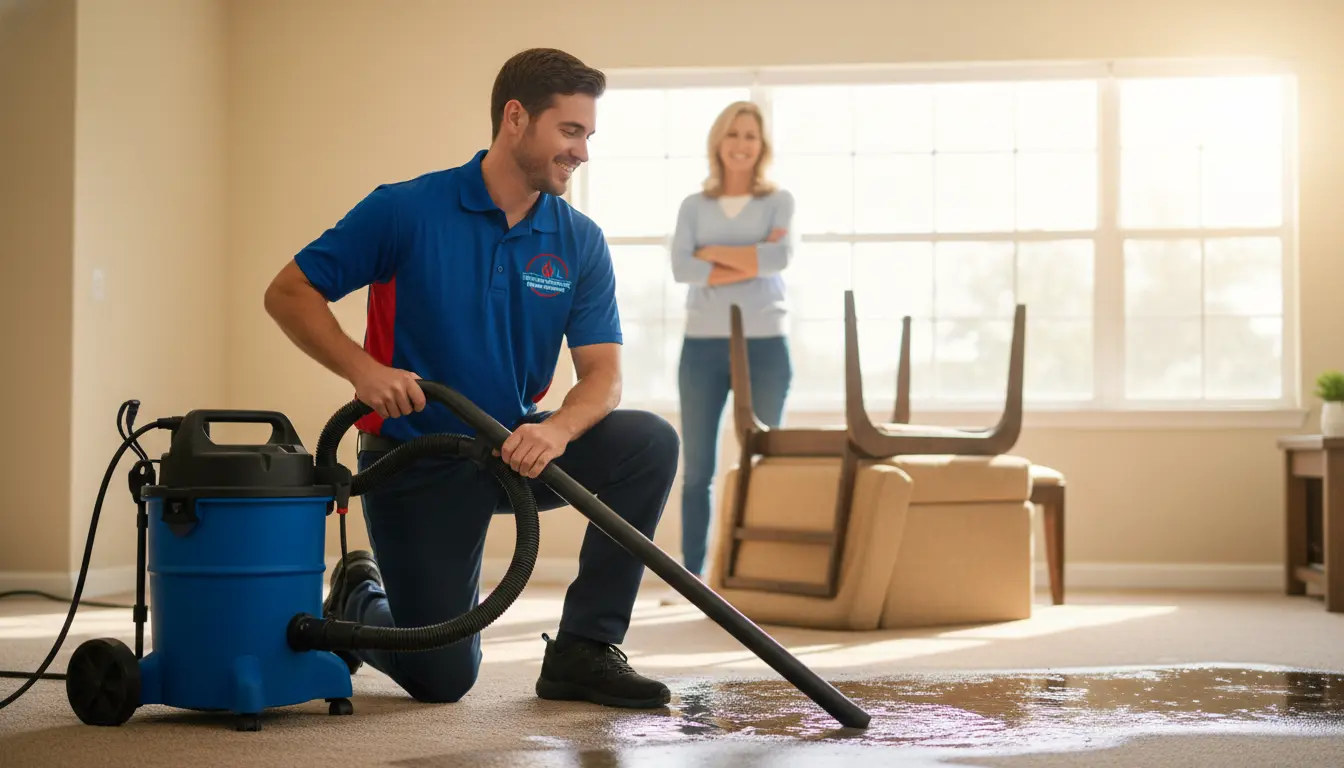
Use buckets, mops, or a wet/dry vacuum to extract visible water. For larger volumes, consider renting a pump, but avoid DIY if the water is deep or contaminated. Our emergency water removal services in Fort Lauderdale are available 24/7 to handle this professionally, preventing structural weakening in your home’s foundation.
Document the Damage: Essential for Insurance and Recovery
Taking photos and videos isn’t just smart—it’s crucial for filing claims.
Capture Before-and-After Evidence
Use your phone to document the affected areas from multiple angles, including wet walls, furniture, and any visible mold starting to form. Note the time and cause of the damage. This evidence will streamline your insurance claim assistance, which we specialize in for Fort Lauderdale homeowners dealing with everything from hurricane aftermaths to plumbing failures.
Keep Receipts and Notes
Track any immediate expenses, like renting dehumidifiers. In flood-prone spots like Hollywood, where seasonal storms are common, insurers often require detailed logs to approve coverage quickly.
Clean Up and Dry Out: Actionable Steps for Fort Lauderdale Homes
Water damage isn’t just about the flood—it’s about what comes after. South Florida’s humidity can turn a minor issue into a major mold problem if not addressed promptly.
Ventilate and Dehumidify
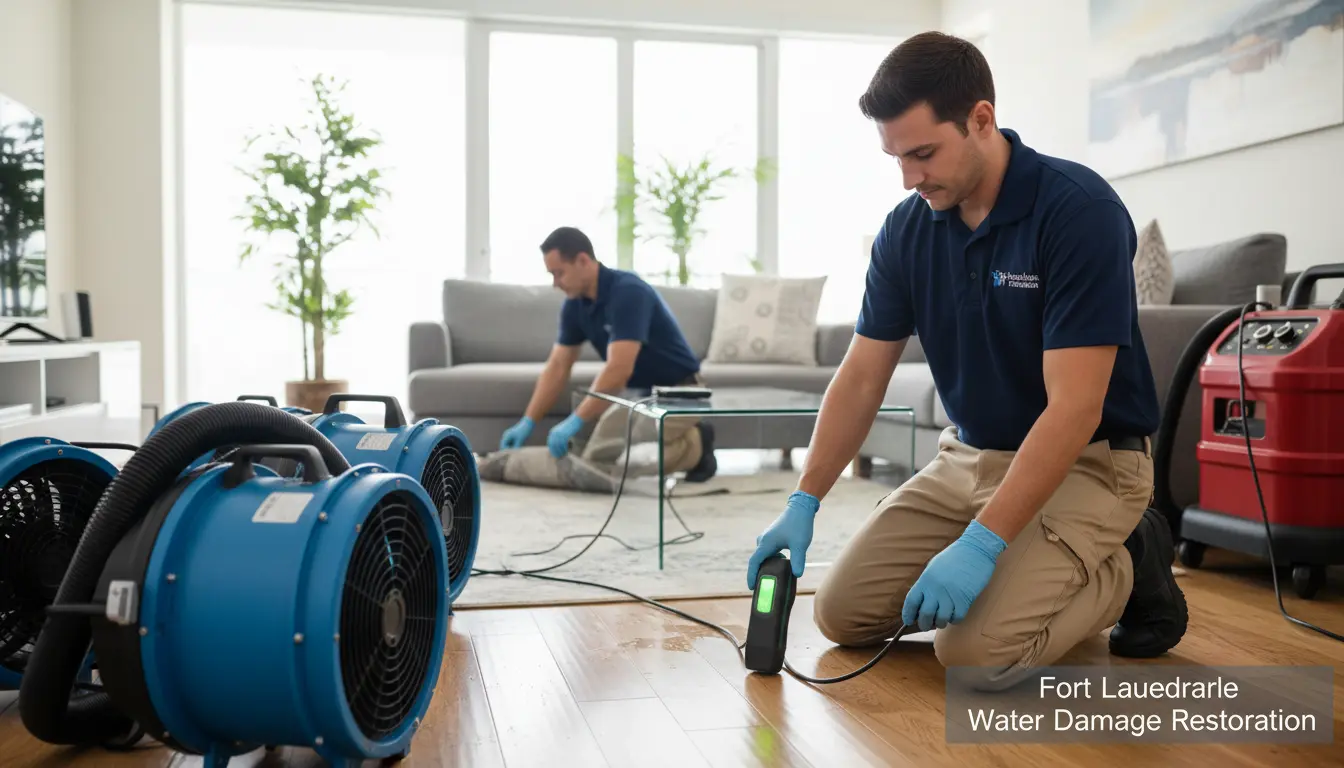
Open windows and doors if safe, and use fans to circulate air. Place dehumidifiers in affected rooms to pull moisture from the air. In high-humidity areas like Flagler Village, this step is non-negotiable to combat the tropical climate’s effects.
Remove Damaged Items
Salvage what you can by moving furniture to dry areas, but discard porous items like carpets and drywall if they’ve absorbed contaminated water. For sewage-related incidents, professional sewage backup cleaning is essential to avoid health risks from pathogens.
Monitor for Mold Growth
Check hidden spots like behind baseboards or under sinks daily. If you spot black mold, stop and call experts. Our mold remediation services have restored homes across Fort Lauderdale, including in Coral Ridge, where mold thrives due to the salty air.
When to Call Professionals: Don’t Go It Alone
While initial steps are DIY-friendly, water damage often requires specialized equipment and expertise. In Fort Lauderdale, where flooding from the New River or ocean surges is frequent, pros can assess hidden damage like warped subfloors or compromised HVAC systems.
For comprehensive flood damage cleanup, contact Fort Lauderdale Water Damage Restoration immediately. We’re local experts who understand the area’s unique needs, from sandy soil that shifts during floods to the rapid mold growth in our warm weather. Delaying professional help can lead to costly repairs down the line.
Fort Lauderdale-Specific Considerations: Local Flood Risks
Living in Fort Lauderdale means preparing for more than just everyday leaks. Our city faces annual threats from hurricanes, king tides, and intense summer rains.
Hurricane Season Preparedness
With peak season from June to November, elevate valuables and know your evacuation routes. In areas like Rio Vista, canal overflows can inundate streets quickly—have sandbags ready.
Urban Flooding Hotspots
Neighborhoods such as Pompano Beach often see flash floods from poor drainage. If you’re in Hollywood, beachside properties are prone to saltwater intrusion, which corrodes everything it touches. Tailor your response to these local factors for better outcomes.
Common Mistakes to Avoid After Water Damage
Rushing cleanup without drying properly can trap moisture, inviting mold. Ignoring structural checks might miss beam damage, especially in older Fort Lauderdale bungalows. And skipping pros? That often leads to incomplete restoration and denied claims.
FAQ: Water Damage Questions for Fort Lauderdale Residents
How soon after water damage should I call a professional?
Ideally within the first 24 hours. The sooner Fort Lauderdale Water Damage Restoration arrives, the less damage—and cost—you’ll face.
Is water damage covered by homeowners insurance in Florida?
Most policies cover sudden events like burst pipes, but not floods from storms— that’s for separate flood insurance. We help navigate this with our insurance expertise.
Can I clean up minor water damage myself?
For small, clean water spills, yes—but anything involving sewage or extensive flooding requires pros to ensure safety and thoroughness.
How long does it take to dry out a flooded home in Fort Lauderdale?
Depending on severity, 3-5 days with industrial equipment. Our humid climate can extend this, so professional drying is crucial.
What if mold appears after the initial cleanup?
Don’t disturb it—call for mold remediation right away to prevent health issues like respiratory problems.
Conclusion: Take Control and Restore Your Home Today
Water damage in Fort Lauderdale can feel overwhelming, but with these emergency tips—from safety checks to professional intervention—you’re equipped to respond effectively. Remember, time is your ally against further destruction. At Fort Lauderdale Water Damage Restoration, we’re here to guide you every step, from initial removal to full recovery. Serving communities like Coral Ridge, Flagler Village, Pompano Beach, Hollywood, and Rio Vista, our team is just a call away. Don’t wait for the situation to worsen—contact us now at (954) 737-4755 for fast, reliable service and get your home back to normal.